
The balance of forces: How Sport Ireland is building for the future
By Dr Úna May
Picture a cyclist high on a velodrome track: they travel at tremendous speed, hanging there at an almost impossible angle. To the onlooker it seems they must fly off the track, they must lose their balance... but they do not.
Science says that’s down to the balance of forces in circular motion.
The cyclist stays up high on the track because gravity pulls them down, their speed generates an inward requirement for centripetal force, and the banked track pushes back at just the right angle to balance those forces.
If they go too slow, gravity “wins” and they slide down the track. If they go too fast, inertia “wins” and they risk climbing higher than intended.
You can read that as a metaphor that informs both Sport Ireland’s High-Performance Strategy 2021–2032, which aims to support Irish athletes in achieving international success, and the Sport Ireland Campus Masterplan Vision.
Both are important and both support each other; if the support and development of high-performance sport and the provision of supporting infrastructure does not have sufficient momentum then we cannot go anywhere. Going too fast brings the risk of losing control.
The development of the National Velodrome and Badminton Centre (NVBC) represents a major investment in the future of high-performance and participation sport in Ireland. Make no mistake about it, it is a significant milestone for Irish sport.
This world-class facility - which will be the only velodrome in the country - will provide our athletes with the environment they need to train, compete, and excel on the international stage. It will also open new pathways for people of all ages and abilities to get involved.

When my children were younger, they got into track cycling and we used to go down to the outdoor velodrome in Sundrive in Crumlin. Which is an excellent facility but, of course, weather dependant. And when the rain came, we had a tent, and we all used to hide in the tent to wait for the rain to die down. Sometimes we’d be sitting around for hours on end. And then you would have to wait for the track to dry, and then they would reconvene the event. I know this facility means that there's going to be nobody sitting in a tent.
Construction is scheduled to take approximately two-and-a-half years, with the facility expected to open by mid-2028. However, it has been a long time in the making.
The beginning of construction of the NVBC is an important step forward in the development of Ireland’s sporting infrastructure. It reflects our shared commitment to supporting athletes at every stage of their journey, while also ensuring that sport is accessible to all.
The Sport Ireland Campus is already a critical piece of national sports infrastructure; in 2026 it will host National Championships for 12 Irish sporting organisations and the Special Olympics Ireland Games. The NVBC represents a key element of the Sport Ireland Campus Masterplan Vision. The facility will feature a 250-metre indoor cycling track, 12 badminton courts within the infield area, and seating for up to 1,000 spectators.
It will play a central role in delivering Sport Ireland’s High-Performance Strategy 2021–2032, which aims to support Irish athletes in achieving international success. By addressing key infrastructure gaps, it will provide a world-class training environment that supports daily preparation, long-term development, and the high-performance goals of both Cycling Ireland and Badminton Ireland.

Carded athletes already benefit from individually-tailored performance services delivered by the world-class Sport Ireland Institute on the Campus, including nutrition, physiotherapy, psychology, strength and conditioning, lifestyle and wellbeing services. In the coming years similarly world-class facilities will be coming on stream.
For cycling, the 250-metre indoor track will provide year-round access for elite and emerging athletes, with the capacity to host international championship events in line with the Major International Sports Events Policy. This will significantly enhance the country’s ability to compete in track cycling, where 12 Olympic medal events are contested, and provide a platform for future pathway development and subsequent international success.
Despite the lack of a velodrome, Irish track cycling enjoyed a landmark year in 2025, highlighted by Lara Gillespie’s historic gold medals in the elite women’s elimination race at both the European Track Championships and the UCI Track World Championships, where she claimed a world title and rainbow jersey.
As it stands our athletes must travel abroad to train and compete, once complete the NVBC will provide an accessible state of the art training location.
For badminton, the NVBC will offer a permanent high-performance base. In addition to elite training, the venue will also expand participation opportunities for the wider community, with participation in badminton having grown strongly in recent years. With all facilities located on site and close to Dublin Airport, it will become a leading national and international hub for both sports.

It will be a game-changer for Irish sport, not only for our elite athletes but for the broader sporting community. By providing consistent access to high-quality facilities, we are removing long-standing barriers and creating new opportunities for growth, inclusion, and excellence.
The continued growth in participation in cycling and badminton reflects wider national trends in increased physical activity. Sport Ireland’s latest Irish Sports Monitor shows that 49% of the population now take part in sport on a weekly basis, the highest level ever recorded. We already know that people want to take part in sport, developments such as this will give them more of the facilities that they need.
By expanding access and creating new pathways into sport, the NVBC will build on this momentum and support Ireland in reaching, and potentially exceeding, the 50% participation target set out in the National Sports Policy 2018–2027.
This will be the first major project to be delivered under Sport Ireland’s new masterplan and will be transformational for the Campus in Blanchardstown, Dublin 15, as well as for high-performance and participation.
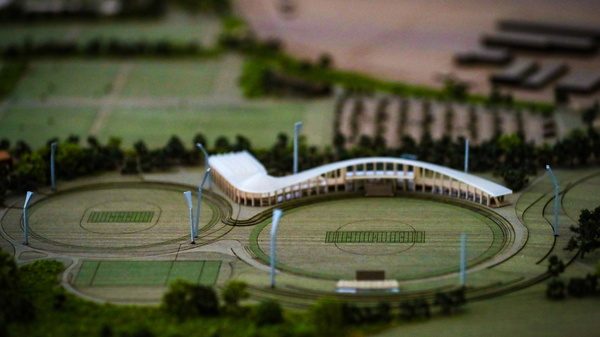
It is not the only big project that has been greenlit this year – in November of 2025 planning permission was granted for the 4,240-capacity National Cricket Centre on the Sport Ireland Campus in Blanchardstown. The facility will allow Ireland’s cricket teams to participate at the highest international standards and allow Ireland to bid for the right to host major cricket events and competitions such as the T20 and ODI World Cups.
We know how strongly cricket resonates across our local community in Blanchardstown and our multicultural communities and we look forward to seeing this centre flourish as a lively meeting place where diversity is embraced and meaningful cultural connections can grow. All around us are reminders of what a powerful, uniting force sport can be and we look forward to this being a vital catalyst for social cohesion. Cricket Ireland have done tremendous work in recent years, and this facility will allow them to grow and develop the game even further.
These projects exemplify what can be achieved through strategic investment and collaboration across the sport sector, and we are proud to be moving from vision to delivery.

Dr Úna May is the CEO of Sport Ireland
A version of this item previously appeared in Sport for Business