
Game Changers
Stories in Motion
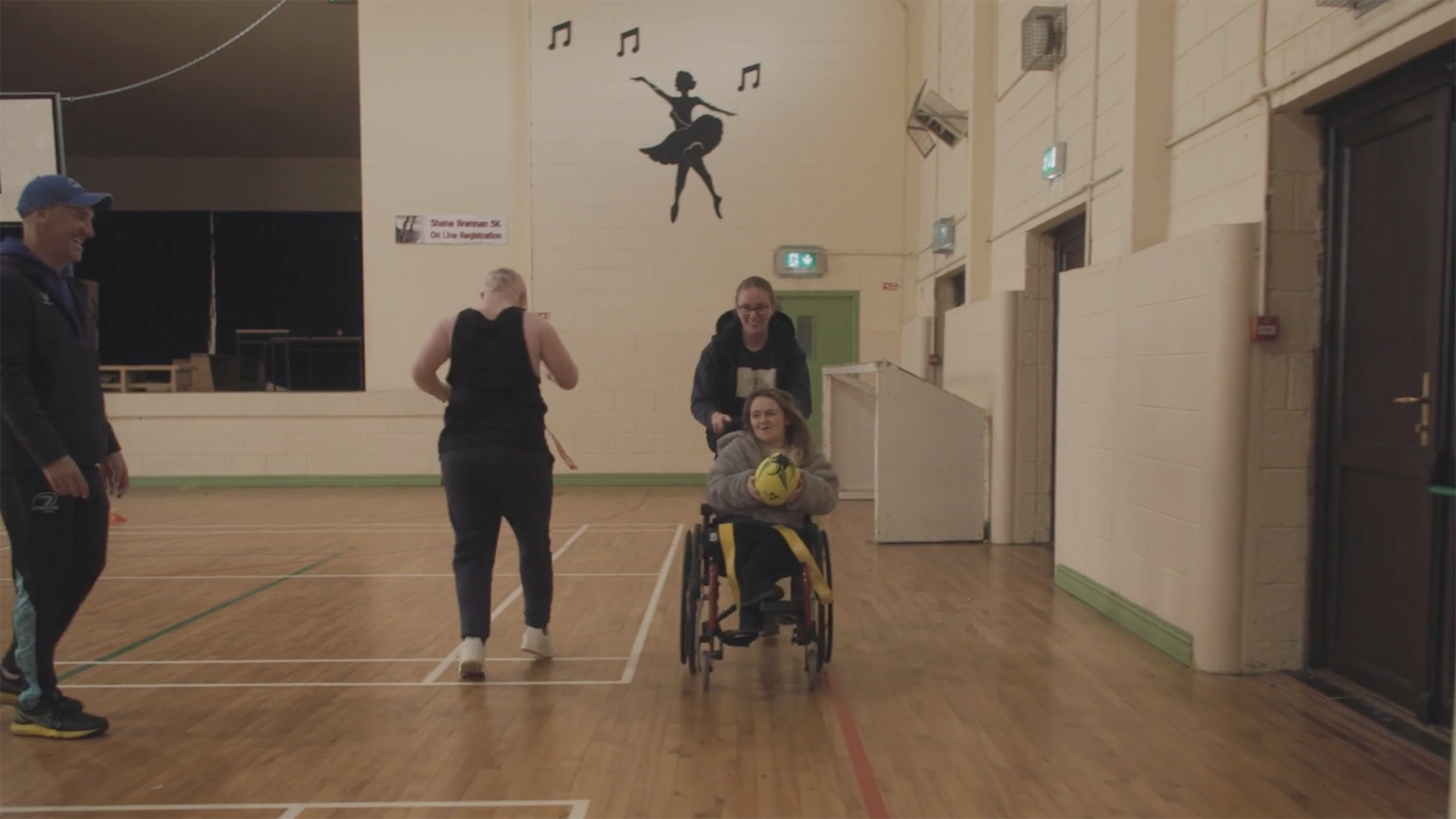
Just before the first training session, one player nearly pulled out. She uses a wheelchair, and she wasn’t sure the game would work for her.
She talked it over with the organisers. Her friends in the group encouraged her to come along. She decided to try it. She loved it and became one of the most committed players on the pitch.
“Her journey shows what this was all about,” says Michael Reilly, the ESF+ Social Innovation in Sport Officer from Longford Local Sports Partnership (LSP). “A place where people felt supported and included, and where they chose to try things they might not have thought possible.”
The group made the choice
The programme came out of conversations about the lack of inclusive sport locally for people with intellectual disabilities, and about building better pathways into community sport.
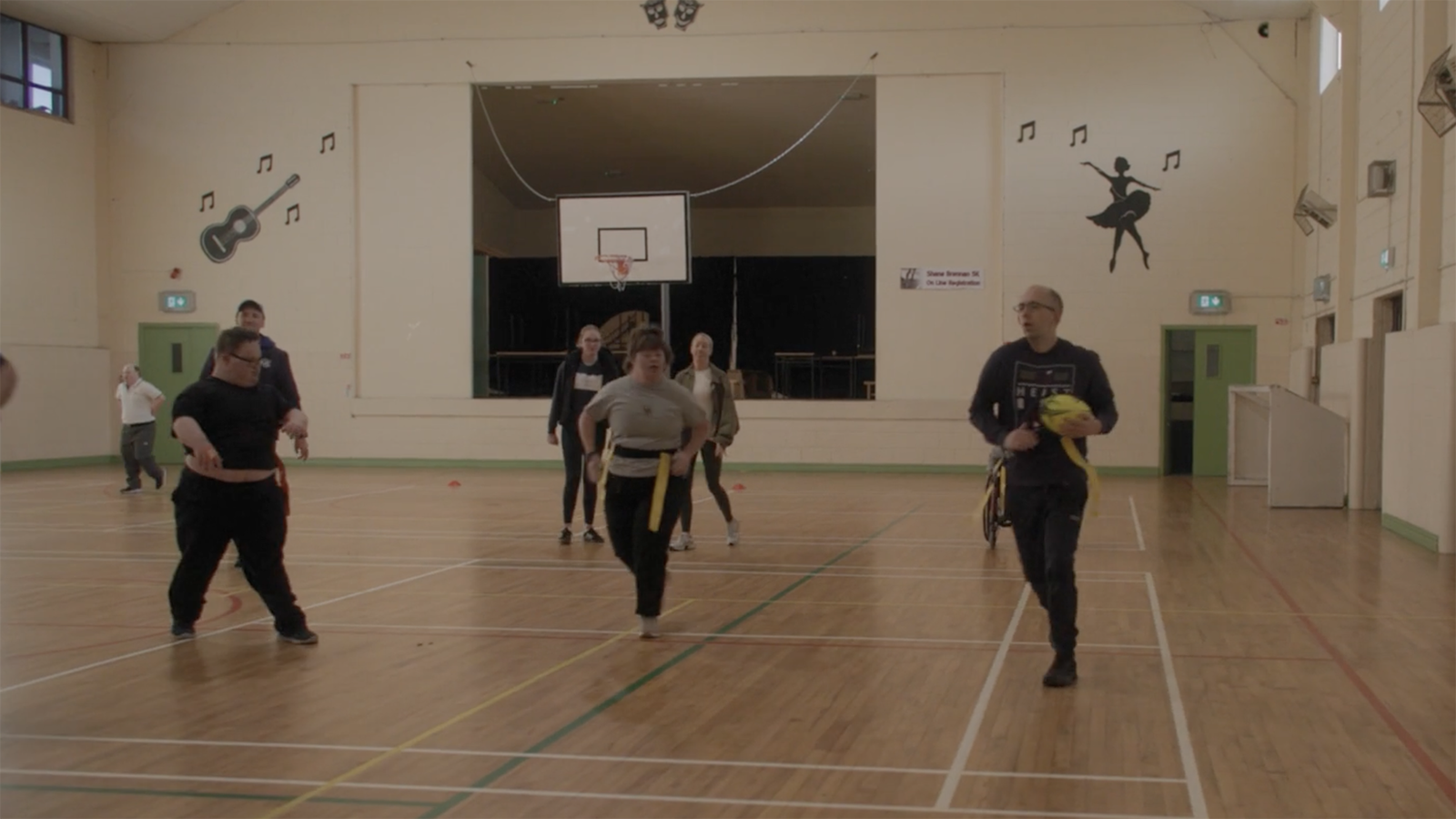
Longford Sports Partnership worked with Leinster Rugby, who provided a Development Officer, and with St. Christopher’s Disability Services, Longford. The group was made up of people aged 18 to 40 with a range of intellectual and physical disabilities. About eight took part in the co-design workshops and around 14 in the sessions.
From the start, the players made the decisions. Two sports were on the table: tag rugby, because it adapts well to many abilities, and horse riding, which few in the group had ever had the chance to try. The group talked it through and gave a clear answer: tag rugby. It was the sport they were most excited to play.
The group kept shaping the programme after that. When session times didn’t suit people’s routines, the times changed, and more people came.
Co-design and Co-operation
The programme came out of conversations about the lack of inclusive sport locally for people with intellectual disabilities, and about building better pathways into community sport.
Longford Sports Partnership worked with Leinster Rugby, who provided a Development Officer, and with St. Christopher’s Disability Services, Longford. The group was made up of people aged 18 to 40 with a range of intellectual and physical disabilities. About eight took part in the co-design workshops and around 14 in the sessions.
From the start, the players made the decisions. Two sports were on the table: tag rugby, because it adapts well to many abilities, and horse riding, which few in the group had ever had the chance to try. The group talked it through and gave a clear answer: tag rugby. It was the sport they were most excited to play.
The group kept shaping the programme after that. When session times didn’t suit people’s routines, the times changed, and more people came.
Friendship, confidence and belonging
The players grew in confidence. They made friends, moved more and became more at ease in a group and with new challenges.
Carers say the players looked forward to every session and talked about them for days afterwards. Their message is simple: the group loved it and wants it back.
The sessions also brought players and the wider rugby community together, and built local understanding of inclusive sport.
What comes next
The sessions have ended, but many players are still involved in sport. Several have joined the Coaching Ability Programme, run by Longford Sports Partnership’s Sport Inclusion and Disability Officer. The programme supports people with disabilities to train as coaches in a range of sports.
The Partnership hopes to bring the group back together in 2027. “We want more people playing,” says Michael O’Reilly. “We also want to support players to become leaders and role models in sport in their own communities.”
About Sport4Empowerment
Sport4Empowerment is a national programme led by Sport Ireland that uses sport and physical activity to support social inclusion. Delivered by Local Sports Partnerships across Ireland and co-funded by the Government of Ireland and the European Union through the European Social Fund Plus (ESF+), the programme works alongside people who face barriers to participating in sport, ensuring their stories are shared with care, consent, and dignity.
This project is co-funded by the Government of Ireland and the European Union.
"Empathy is a huge part of this role, and having lived experience is a real benefit. I bring that into everything I do. What better way to increase social inclusion than to introduce people to a sport they first believed they weren't physically capable of? We stand side by side with the community and build from the ground up. Participants have a say in every step of the process, and that's what makes this programme different."