
Early medieval ringfort discovered on Sport Ireland Campus
A ringfort that could be up to 1,400 years old has been discovered on the Sport Ireland Campus.
The early medieval enclosure, dating from between 600 and 900 AD, was found near the cross-country running track on the Sport Ireland Campus in Blanchardstown during archaeological investigations. The investigations are taking place as part of preparation work for the Uisce Éireann Greater Dublin Drainage Project, a major regional wastewater infrastructure program.
At 75 metres in diameter, the ringfort is large, which suggests it was important, say archaeologists. In early medieval Ireland ringforts served as homes and farmsteads for families, as well as enclosures for livestock.
Members of the Blanchardstown and Castleknock History Society and the Clonsilla and Porterstown Heritage Society recently visited the site to learn more about the history of their local area.
Archaeologists discovered various objects at the site, including a flint hollow scraper which is estimated to be between 2,500 and 3,000 years old, and Leinster cooking ware pottery that dates from the 12th to the 15th centuries. They also found the remains of a sheep’s head, a fitting find in a townland called Sheephill.
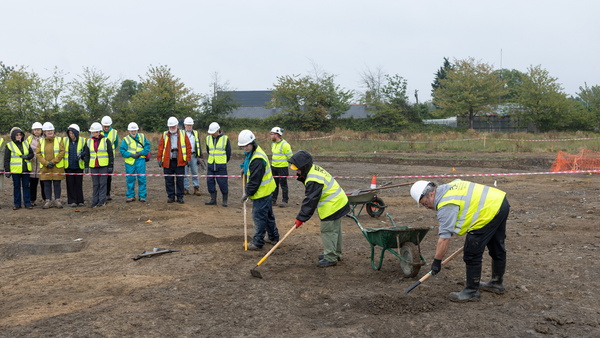
Sport Ireland CEO Dr Úna May said: “Sport Ireland is proud to foster a strong connection to the local community and its heritage. The discovery of the ringfort only strengthens our understanding of the area. As we continue to expand and develop the world class sports facilities on the Sport Ireland Campus, we will continue to respect the history of the area while building towards a sustainable exciting future.”
All archaeological records and associated archival material from the excavation will be deposited with the National Monuments Service Archive and all recovered artefacts will be deposited with the National Museum of Ireland.
Project archaeologist Derek Gallagher said: "Through a combination of geophysical surveys and test trenching, our team identified the remains of a circular enclosure hidden beneath the surface.
“Discoveries like this provide a fascinating glimpse into how people lived in this area over a thousand years ago. Archaeological investigations not only help protect our heritage, but they also create a permanent record that contributes to our understanding of the history of the site and can be shared with future generations."
The Greater Dublin Drainage project is designated as critical national infrastructure under the Critical Infrastructure Act 2026. It will provide wastewater treatment capacity equivalent to a population of approximately 500,000 people and support the delivery of up to 185,000 new homes across north Dublin and surrounding parts of Meath and Kildare, while also helping to safeguard the environment and protect Dublin Bay. The project includes a regional wastewater treatment facility at Clonshaugh, an orbital sewer network, a pumping station, and a marine outfall to the Irish Sea.